

Personal care and home
What are red light and near-infrared (NIR)?
Red light is visible light between 620 and 700 nanometers; near-infrared (NIR) begins where red ends, at around 700, and the eye cannot see it. LED face masks and panels for skin care emit one or both. The figure in nanometers tells you the color, not the intensity.
What the nanometers tell you
Wavelength, measured in nanometers (nm), defines the color of light. In skin care devices, red light is usually between 630 and 660 nm, and near-infrared between 810 and 850 nm. Some masks add blue light, at around 415 nm.
Because NIR is invisible, it is normal for those LEDs to look switched off or to show only a faint reddish dot: it is not a fault. Wavelength also does not tell you how much light reaches the skin; that depends on the power of the LEDs, how many there are and the distance.
Cosmetic use, not medical treatment
Using red and infrared light on the skin is known as photobiomodulation and is a subject of ongoing study. Home devices are personal care products: they do not diagnose or treat disease, and their effects vary from person to person.
Follow the session time the manufacturer states; more minutes do not mean better results. Protect your eyes if the device says so. If you have a skin condition, are pregnant or take medication that increases sensitivity to light, check with your doctor first.
What to check before you buy
- Check which wavelengths (nm) it emits and whether it includes red, NIR or both.
- Look at the number of LEDs and the area covered: face, neck or both.
- Value a timer with automatic shut-off and eye protection.
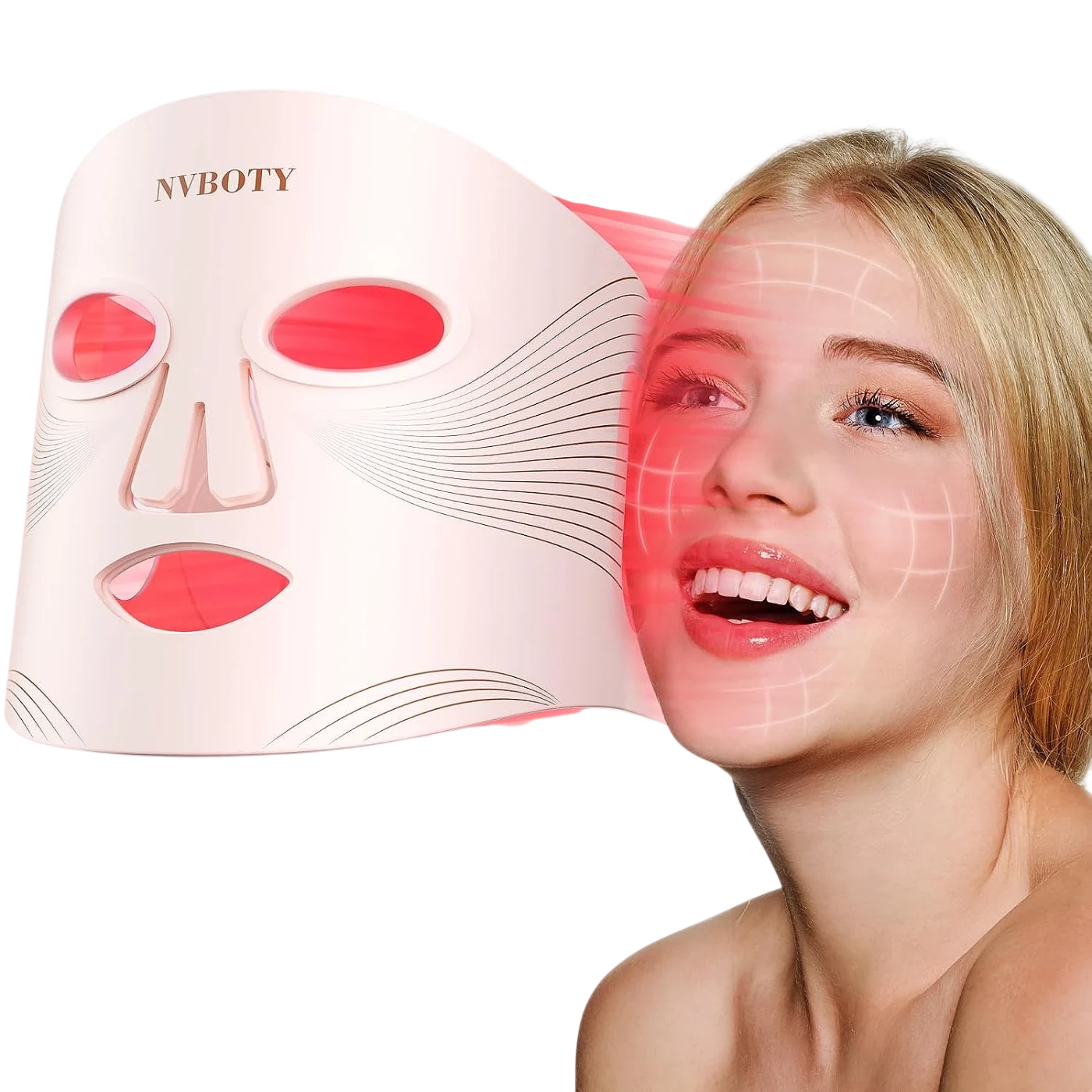
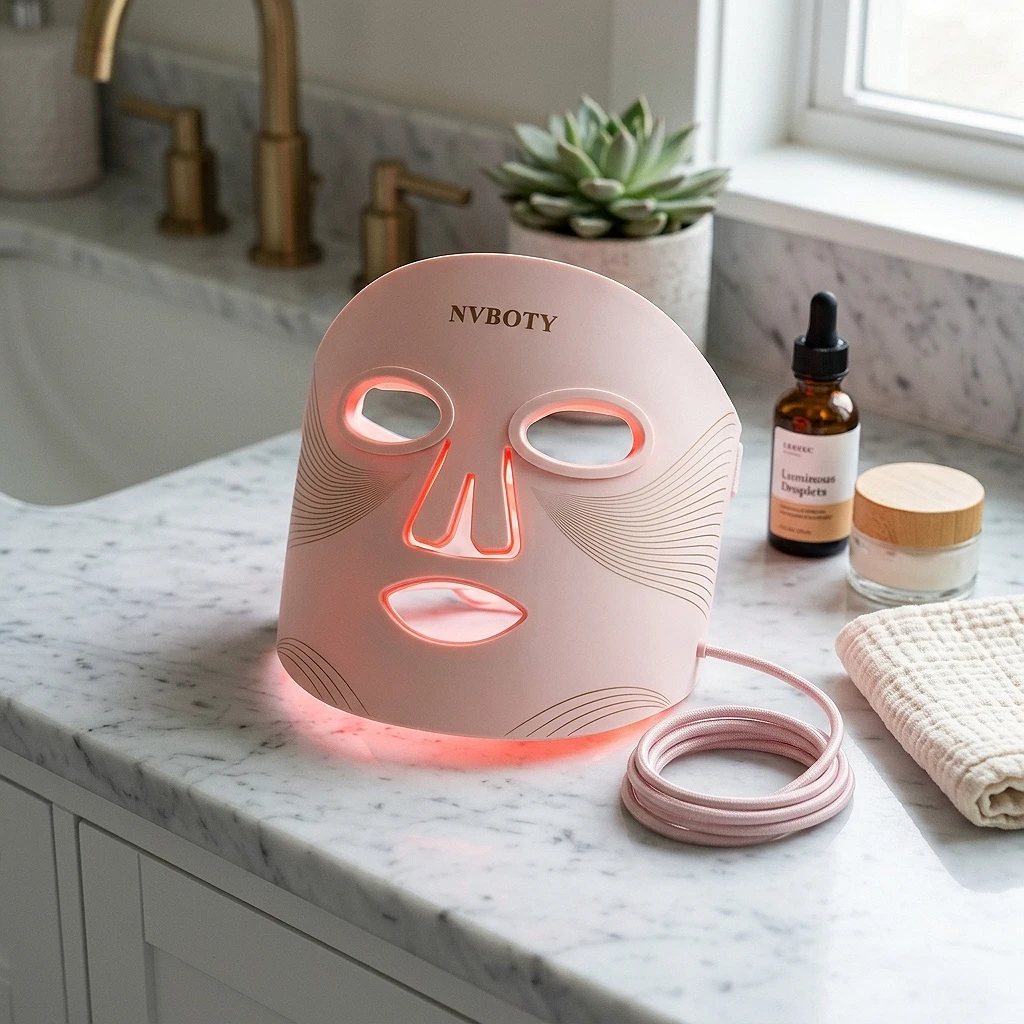
Products with Red light and NIR in our store
This is how it appears on their spec sheet. Open each one to see all its specifications.
Guides to help you choose
Frequently asked questions
They are probably the near-infrared ones. That light is invisible to the eye, so those LEDs look off even while they are working.